ServicesWater Softener Installation
Water Softener Installation in Maricopa
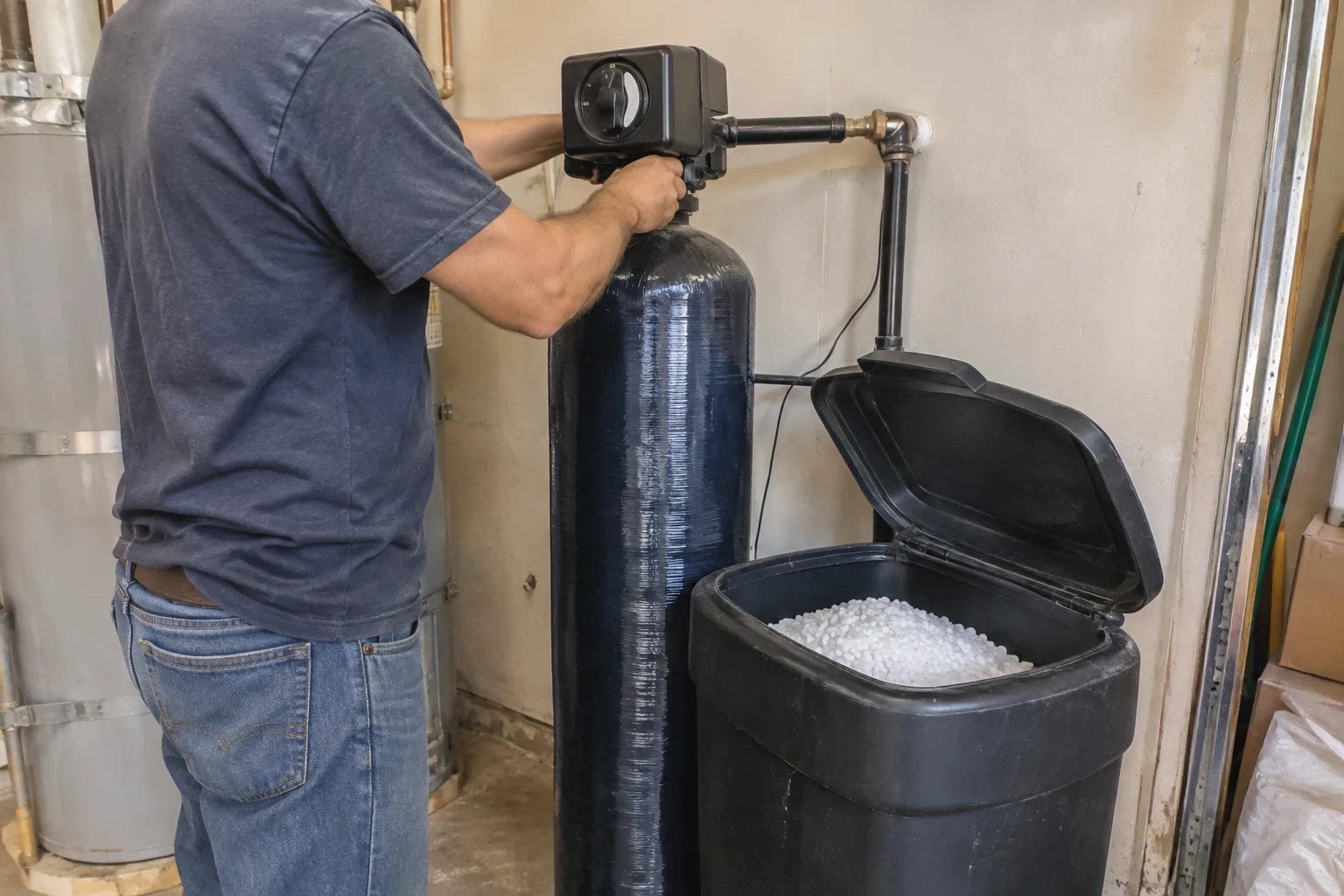
We install water softeners with the care we would want in our own home. Floors are covered, the old unit is hauled away and the garage is left as clean as we found it. You get softer water, less scale on fixtures and a system sized to how you actually use water.
Soft water, installed with care
Hard water leaves calcium and magnesium behind wherever it dries. That shows up as white crust on faucets, film on shower glass and scale inside the water heater. A softener exchanges those minerals in a resin tank before the water reaches your fixtures, so they stop building up in pipes and appliances.
Many newer homes around Maricopa were built with a softener loop in the garage, which makes a clean installation straightforward. Where there is no loop, we plumb one in and explain what that adds to the job before any work starts.
We treat the space as part of the job. Drop cloths go down first, cutting and fitting happen away from finished surfaces, and every scrap of packaging leaves with us.
What the installation includes
- 01
Sizing to your household
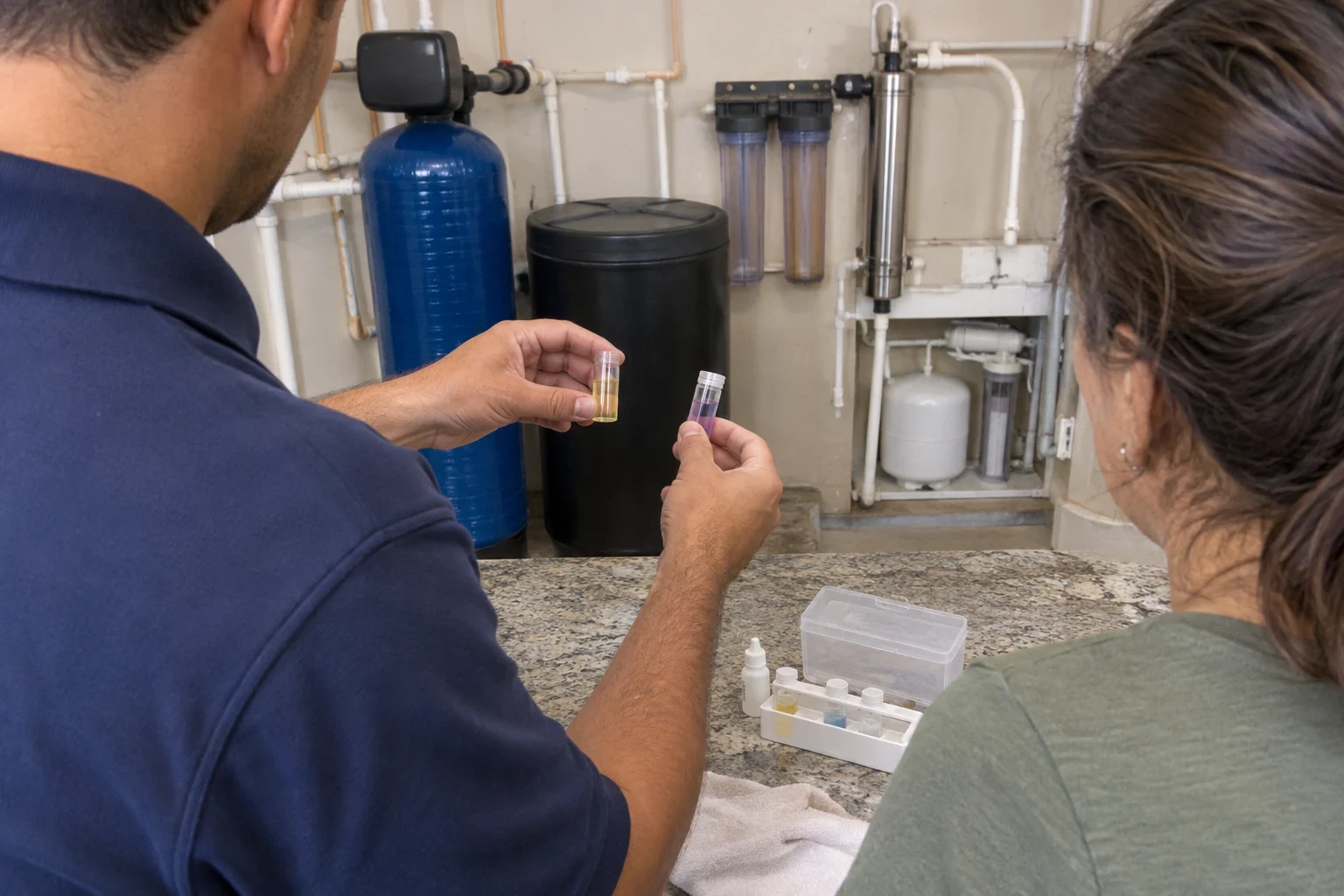
We ask how many people live in your home, how many bathrooms you have and how water gets used on an ordinary day. That tells us what resin capacity will regenerate on a sensible schedule. An undersized tank runs out of soft water, and an oversized one wastes salt.
- 02
Connection with a bypass valve
The softener joins your existing loop through a bypass valve. If the unit ever needs attention, you can take it offline and still have water at every tap and fixture. Homes without a loop get one plumbed in as part of the job.
- 03
Drain and overflow lines
We run the regeneration drain to a proper discharge point with an air gap. The brine tank overflow is routed too, so a stuck float never spills water onto your garage floor.
- 04
Programming and first fill
Before leaving, we program the regeneration time and control settings, load the first salt and run a complete cycle.
- 05
Removal of the old unit
If an older softener is being replaced, we disconnect it, drain it outside and take it away in our vehicle.
- 06
Cleanup and walkthrough
The floor is swept and wiped and the work area cleared. Then we point out the bypass, show you the right salt level and explain what the control head is telling you.
Questions about Water Softener Installation?
Call(520) 473-1005Signs your home needs a softener
Scale on fixtures that keeps returning
A pale, chalky ring around faucet bases or showerhead nozzles that reappears days after you scrub it is mineral scale. That same deposit is forming inside pipes and valves out of sight.
Spots on glass and dishes
Glasses that come out of the dishwasher cloudy, and shower doors with a haze you cannot wipe clean, mean minerals are drying on every surface the water reaches.
Sounds from the water heater
A popping or rumbling noise from the tank often means scale and sediment have settled at the bottom. The burner or element has to work longer to heat through that layer, which shortens the heater's life.
Soap that will not lather
Hard water works against soap and shampoo. You end up using more and still notice a film on your skin and hair afterward.
An old softener that stopped keeping up
When the unit still cycles but spotting has come back, the resin may be spent or the valve may be wearing out. We will give you a straight answer on whether replacing it makes sense.
How installation day runs
- 1
A conversation by phone
We talk through your household, where your loop is and whether an old unit is coming out. You get your quote by phone, with each part explained.
- 2
Protecting the space
Before tools come out, we lay drop cloths and cardboard along the path and around the work area. Shoe covers go on at the door.
- 3
Installing and checking connections
We shut off the water, connect the softener and bypass, and run the drain and overflow lines. Every joint is checked for leaks under pressure, then the system runs a regeneration.
- 4
Cleanup and handover
We sweep, wipe down and remove all packaging and old parts. Then we walk you through the system and leave the warranty details with you.
What affects the price
Each installation is priced on what your home needs, and we explain every part of the quote before work begins. No line appears later that we did not discuss. These are the things that move the number.
- System size
- Larger households and higher water use call for more resin capacity, which means a larger tank.
- Valve and control type
- Metered valves that regenerate based on actual use cost more up front than timer models, but they use less salt and water over time.
- Whether a loop exists
- Connecting to an existing softener loop is simpler than adding new plumbing to create one.
- Removing an old unit
- Disconnecting, draining and hauling away an older softener adds some time to the day.
- Pairing with filtration
- Some homeowners add carbon filtration ahead of the softener for chlorine taste and odor. Our Whole-Home Filtration page covers how that works.
Softener installation questions
What warranty comes with a new softener?
Our installations are backed by a 2-year labor warranty and a 2-year installation warranty. On top of that, the salt tank, resin tank and valve body are covered by a lifetime warranty. We go over what each one covers on the day we hand the system over.
How long does installation take?
When your home already has a softener loop and a drain nearby, the work typically fits into part of a day. Adding a new loop or removing an older unit stretches that out. We give you an honest time window when we talk by phone.
Is softened water fine to drink?
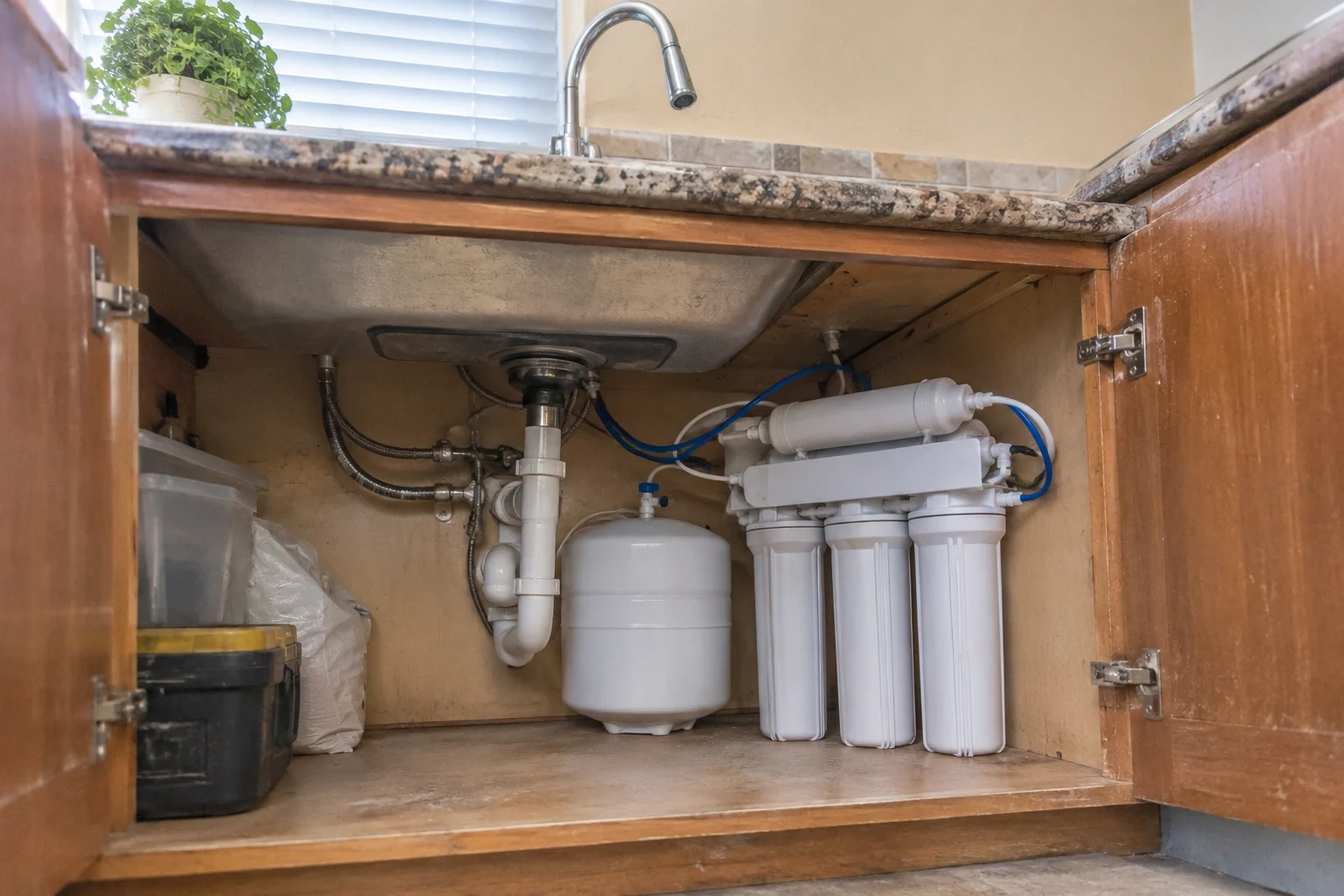
Softening trades hardness minerals for a small amount of sodium. Many homeowners drink it every day with no concern. If you would rather have filtered water for your coffee, cooking and drinking glass, a Reverse Osmosis System under the kitchen counter handles that.
How often will I need to add salt?
The amount depends on how much water your home uses, since every regeneration draws from the brine tank. Lifting the lid once a month tells you where you stand. For homeowners who would rather not haul heavy bags into the garage, our Automated Salt Delivery service keeps the tank stocked on a set schedule.
Will the installation leave a mess in my garage?
No. We cover the floor before the first tool comes out and keep cuttings and fittings in one contained spot as we work. At the end we sweep and wipe the area, and the old equipment and all packaging leave with us.
Plan your softener installation
Tell us about your home and your current setup, and we will explain the right size, the work involved and what it costs. Then we install it carefully and leave the space clean.