ServicesAutomated Salt Delivery
Automated Salt Delivery in Maricopa
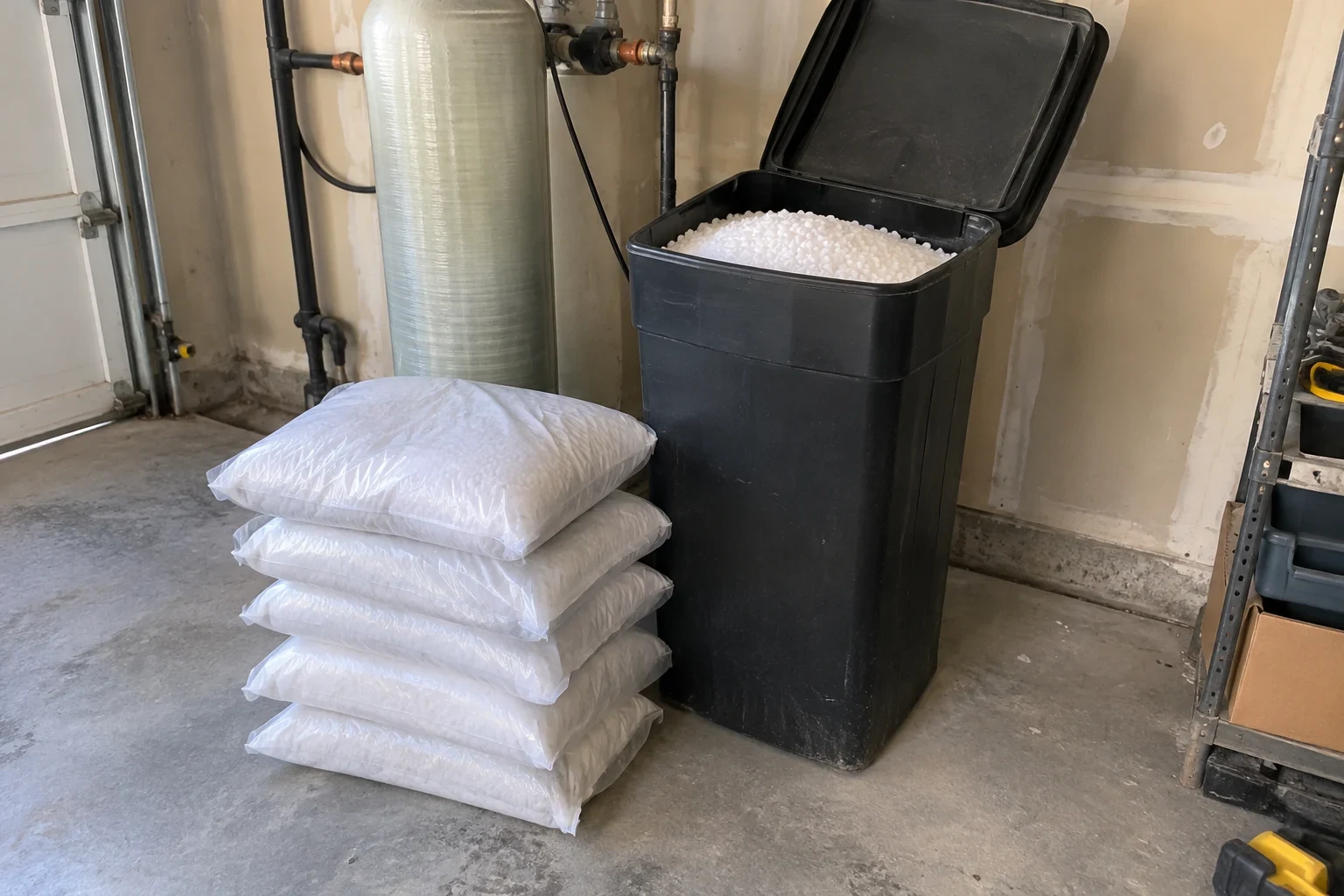
We bring softener salt to your home on a schedule matched to how much your household uses, carry the bags in and pour them into the brine tank for you. Floors stay protected, spills get swept, and the empty bags leave with us.
Salt that shows up before the tank runs low
A water softener only works while there is salt in the brine tank. Once it runs dry, the resin stops pulling out calcium and magnesium, and hard water goes straight to your fixtures, water heater and glassware. Most people notice only when spots return to the shower glass.
Our automated salt delivery takes that chore off your list. We work out how quickly your softener goes through salt, then set a delivery rhythm around it. Each visit, we bring the bags in, fill the tank to the right level and look at how the salt is sitting.
It also saves your back. A single bag of softener salt is heavy, and many tanks sit in a tight garage corner or a laundry closet. We handle the lifting and leave the area as clean as we found it.
What each delivery includes
- 01
Carry-in and pour
We bring the salt from our truck to the softener and pour it into the brine tank. You do not need to move anything or meet us at the curb.
- 02
Floor and wall protection
We lay a mat by the tank before we open a bag. Salt grit scratches finished floors and can stain grout, so we keep it off them.
- 03
Bridge and mush check
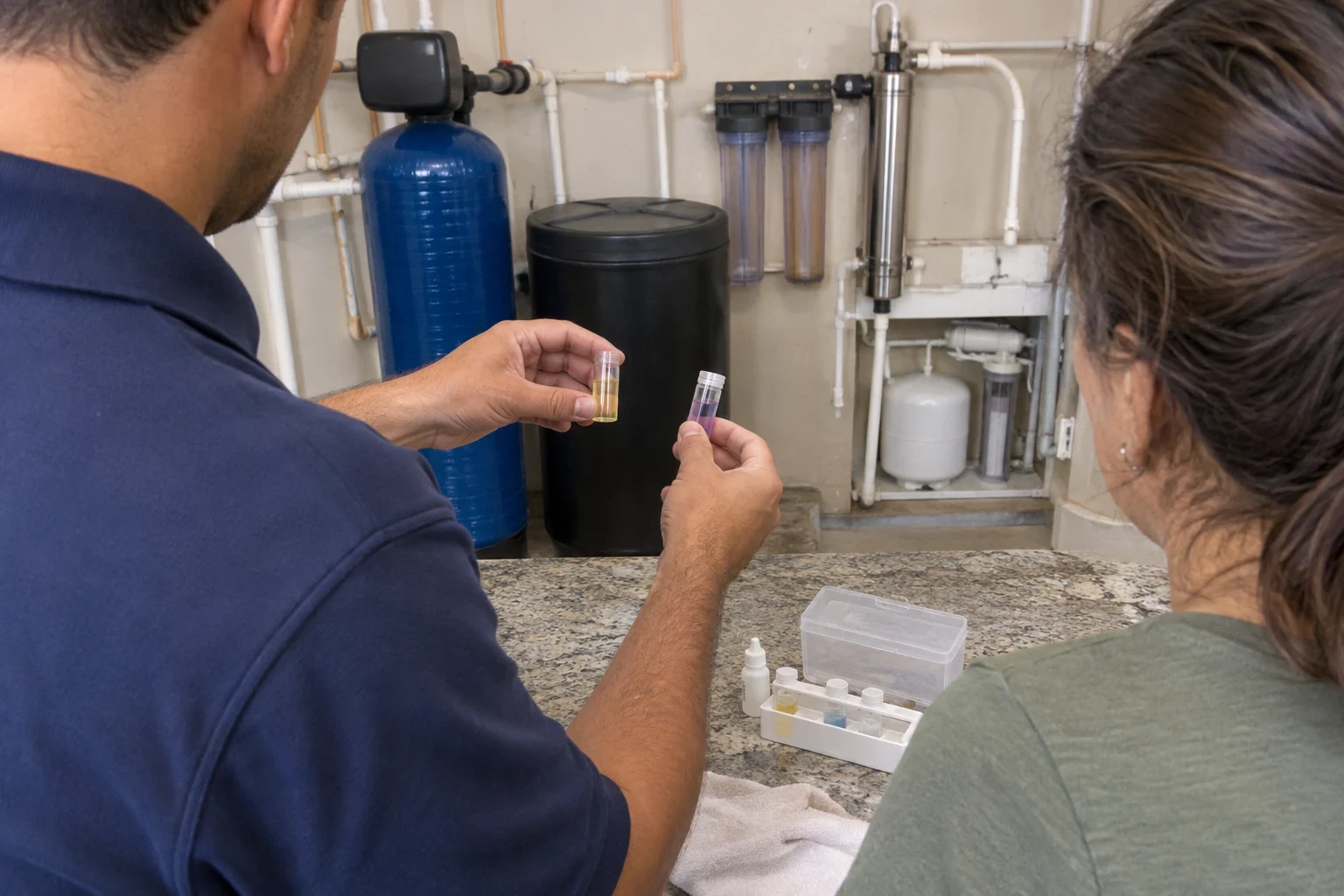
We look for a hard crust of salt that can form above the water, called a bridge, and for a sludgy layer at the bottom. We break up a bridge on the spot and tell you if the tank needs a deeper cleaning.
- 04
Fill level set to your softener
Overfilling wastes salt and can encourage bridging. We fill to the level your tank and settings call for.
- 05
Cleanup and bag removal
We sweep up stray crystals, wipe the tank lid and take every empty bag with us.
- 06
A short note on what we saw
If something looks off, like a brine tank that is not drawing down, we tell you before we leave so you can decide what to do.
Questions about Automated Salt Delivery?
Call(520) 473-1005Signs a salt schedule would help
The tank keeps running empty
If you open the lid and find bare resin or just water, the softener has been regenerating without salt. Hard water has likely been reaching your plumbing since.
Spots and scale are back
White film on faucets, cloudy dishes and stiff towels often mean the softener ran out of salt, not that it failed.
Hauling bags is a strain
Lifting heavy bags out of a car and into a garage corner is hard work in a summer heat that can feel punishing by midmorning. Plenty of our customers simply would rather not.
Salt has hardened into a crust
A tank that looks full but never seems to go down may have a bridge. We clear it during delivery and keep an eye on it going forward.
How a delivery visit runs
- 1
A phone call to set it up
You tell us about your softener, its tank size and how many people live in your home. We suggest a salt type and a starting delivery rhythm.
- 2
First visit and baseline
We check the brine tank, note the fill level and how fast it draws down, and fill it. That first look lets us fine-tune the schedule.
- 3
Regular deliveries
We come back on the agreed rhythm, protect the floor, fill the tank and check for bridging. Visits are short and quiet.
- 4
Adjusting as life changes
Guests for the season, a new baby or a larger household all change salt use. Let us know by phone and we will adjust the schedule.
What shapes the cost of salt delivery
Your price depends mostly on how much salt your softener uses and how often we visit. We explain the numbers on the phone before the first delivery, so you know what each visit will cost and why.
- Type of salt
- Standard pellets, higher-purity pellets and potassium chloride are priced differently. Potassium chloride costs more, and some households choose it to reduce sodium.
- How much your home uses
- Household size, water use and how hard your water is set to treat all drive salt consumption. More use means more bags per visit or more frequent visits.
- Delivery frequency
- A tank that needs topping up often costs more over a year than one filled less frequently. We set a rhythm that keeps the tank from running dry without overfilling it.
- Tank size and location
- A large tank in an open garage is quick to fill. A small tank in a tight interior closet may need more frequent visits and more care to keep the area clean.
Salt delivery questions
Do I need to be home for deliveries?
Not always. Many customers give us access to the garage where the softener sits. We set that up together on the first call, and you decide what works for your home.
Which salt should I use in my softener?
Most softeners run well on clean, high-purity pellets, which leave less residue in the brine tank. Potassium chloride is an option if you want less sodium in your water. We talk through the trade-offs and match the salt to your system.
Can you deliver salt for a softener you did not install?
Yes. We fill and check most brands of softener. If we notice a problem with the unit itself, we will tell you what we saw and what your options are.
What warranty comes with a softener you install?
Softeners we install carry a 2-year labor warranty and a 2-year installation warranty, plus a lifetime warranty on the salt tank, resin tank and valve body. Regular salt service keeps the system running the way it was designed, which helps you get full use of that coverage. Our Water Softener Installation page explains the install itself.
What if my brine tank has a lot of sludge?
Sludge, often called mushing, builds up from lower-purity salt over time. We point it out during a delivery and can talk with you about cleaning the tank so fresh salt dissolves properly.
Never lift another bag of softener salt
Tell us about your softener and your household, and we will suggest a salt type and a delivery rhythm that fits. Each visit leaves the floor swept and the empty bags gone.