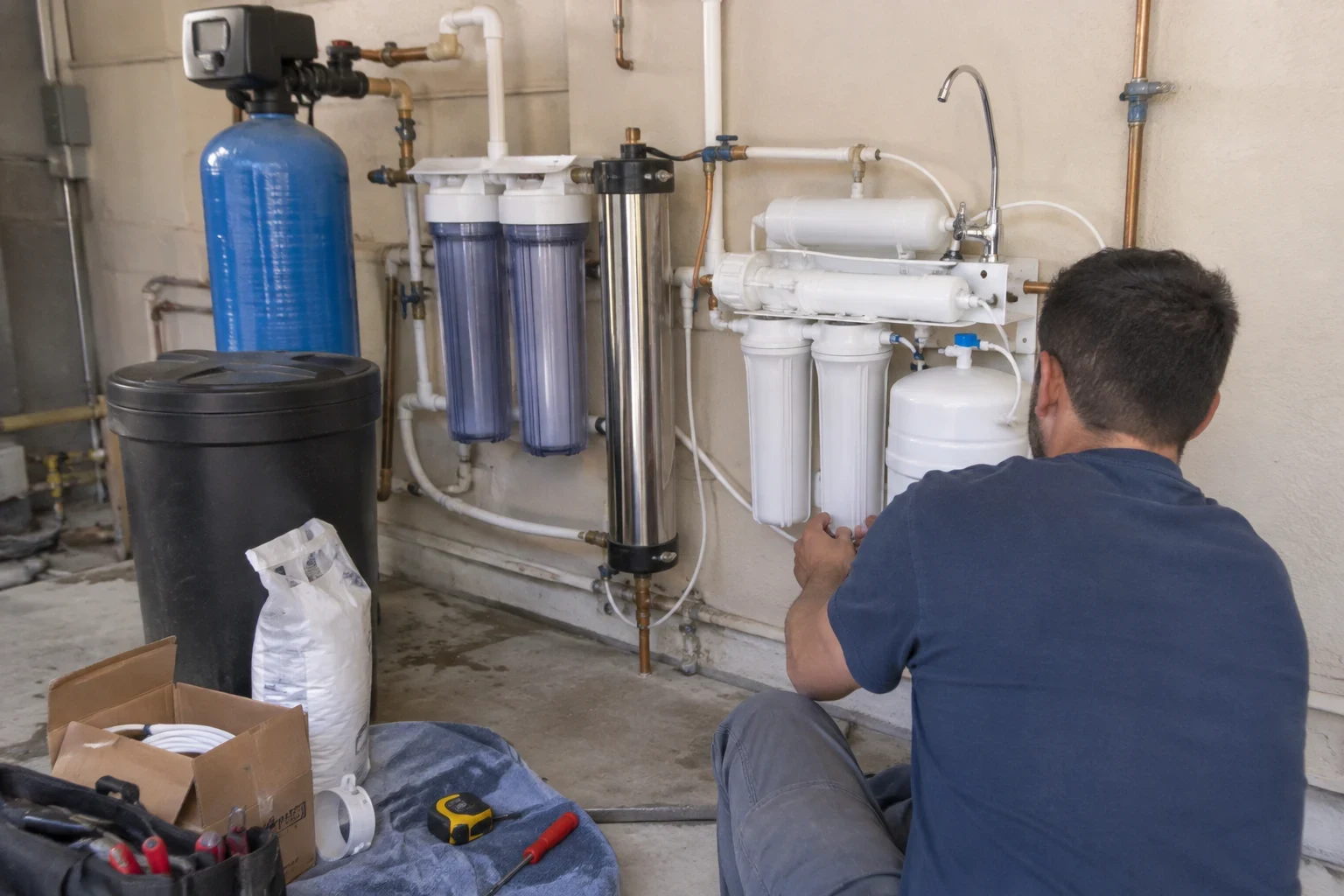
ServicesReverse Osmosis System
Reverse Osmosis System Installation in Maricopa
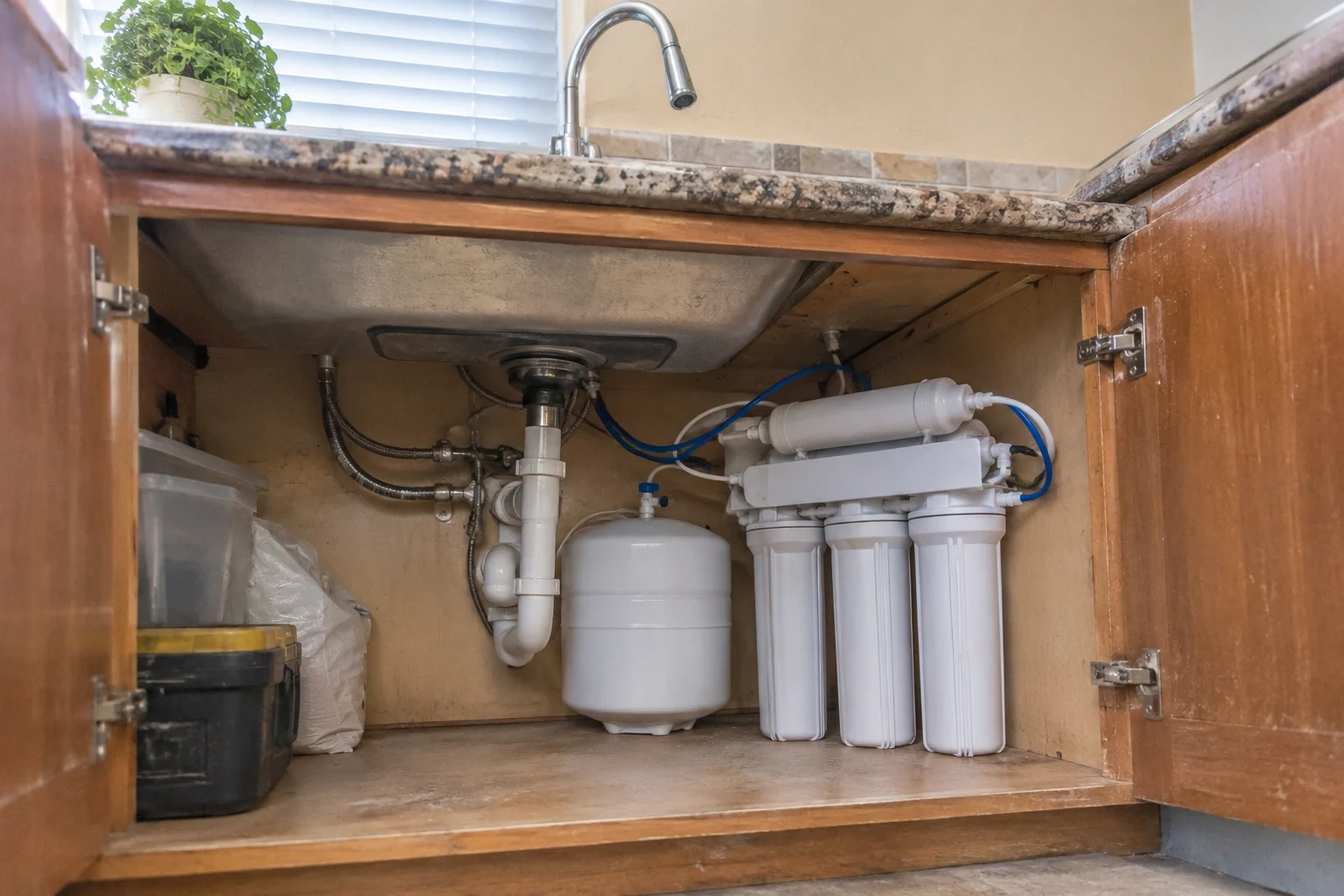
We install under-sink reverse osmosis systems that give your kitchen clean-tasting water for drinking, coffee and cooking. The work stays inside one cabinet, we protect the floor and countertop while we fit it, and we leave the space cleaner than we found it.
Filtered drinking water from one kitchen faucet
A reverse osmosis system pushes water through a very fine membrane, with sediment and carbon stages before and after it. What reaches the small faucet at your sink is low in dissolved minerals, chlorine taste and the salty edge that softened water can carry. It is drinking and cooking water, not whole-house treatment, so it lives under the kitchen sink and feeds one tap, and often the refrigerator too.
Water across the Phoenix area runs high in dissolved minerals, which is why many homes here pair a water softener with an RO system. The softener protects pipes, fixtures and appliances. The RO unit then takes the softened water at the kitchen and removes the sodium and remaining minerals before you drink it. If you want cleaner water at every tap instead, our Whole-Home Filtration page covers that work.
What the installation includes
- A system matched to your kitchen
- We ask how much water your household drinks and cooks with, measure the cabinet space, and talk through tank or compact tankless designs. You get the unit that suits the kitchen, not the biggest one on the shelf.
- A drinking faucet set with care
- When your sink has a spare sprayer or soap dispenser opening, we put the new faucet there. If the counter needs a fresh hole, we cut it with a bit made for granite, quartz or laminate and clear away every bit of dust right after.
- Feed, drain and shutoff connections
- We tap the cold line with a proper feed valve, add a drain saddle on the sink drain and route the tubing neatly along the cabinet walls. Each fitting is checked for drips before the cabinet goes back together.
- Refrigerator line, if you want it
- Many owners like RO water in the ice maker and fridge dispenser. We can run a line to the refrigerator when the route allows it, without leaving tubing exposed across the floor.
- Flush, start-up and a short walkthrough
- We flush the new filters and membrane, fill the tank, and show you where the shutoff is and when each stage is due for a change.
When reverse osmosis makes sense for your home
You buy cases of bottled water
Carrying jugs and flats home every week adds up in cost, storage and plastic. An RO faucet gives you the same kind of water on tap.
Softened water tastes salty
A softener does its job by swapping hardness minerals for sodium. If that taste bothers you, or someone in the house watches sodium, an RO system at the kitchen sink is the usual answer.
White film on kettles and glassware
Mineral spots on coffee makers, kettles and drinking glasses come from what is dissolved in the water. RO water leaves far less behind.
Chlorine taste in coffee and ice
The carbon stages in an RO system take out the chlorine taste and smell that can show up in coffee, tea and ice cubes.
Your current unit is old or leaking
An aging system with a weeping fitting or a tank that no longer holds pressure is worth replacing before water damages the cabinet floor.
What moves the cost of an RO install
Most reverse osmosis jobs are simple, yet every kitchen has its own layout. Your price comes down to the unit you pick and the condition of the plumbing under the sink. We go through each line of the quote with you, so nothing new appears on the day.
Which unit you choose
A standard model with a storage tank, a compact tankless unit and a system with a remineralization stage are priced differently. They also differ in what replacement filters cost over the years.
Where the faucet goes
If your sink already has a spare opening, the faucet goes in quickly. Cutting a fresh hole through granite or quartz is slower, more careful work than going through laminate, and the quote reflects that.
Feeding the refrigerator
Sending RO water to the ice maker and dispenser calls for more tubing, a few extra fittings and added time. A refrigerator on the far side of the kitchen, or one that needs the line routed behind cabinets, costs more to reach than one standing next to the sink.
What we find under the sink
A corroded shutoff, a packed cabinet or an odd drain arrangement can call for a small repair before the system goes in. We show you anything like that and explain it before work starts.
How the day goes
- 1
A conversation by phone
You describe your kitchen, the sink and what you dislike about your drinking water now. We lay out the choices that fit and give you your quote by phone, so the plan is settled before we arrive.
- 2
Protecting the work area
We put down a drop cloth on the kitchen floor, pad the base of the cabinet and cover the counter around the sink. Whatever you store under the sink is set aside in order, where you can find it.
- 3
Installation and leak checks
We mount the unit, fit the faucet and make the feed and drain connections. Then we pressurize the system and watch every joint before calling it done.
- 4
Cleanup and handover
We vacuum up any drill dust, wipe the cabinet and counter, return your things and carry the packaging out with us. You get a short walkthrough and a faucet that is ready to pour.
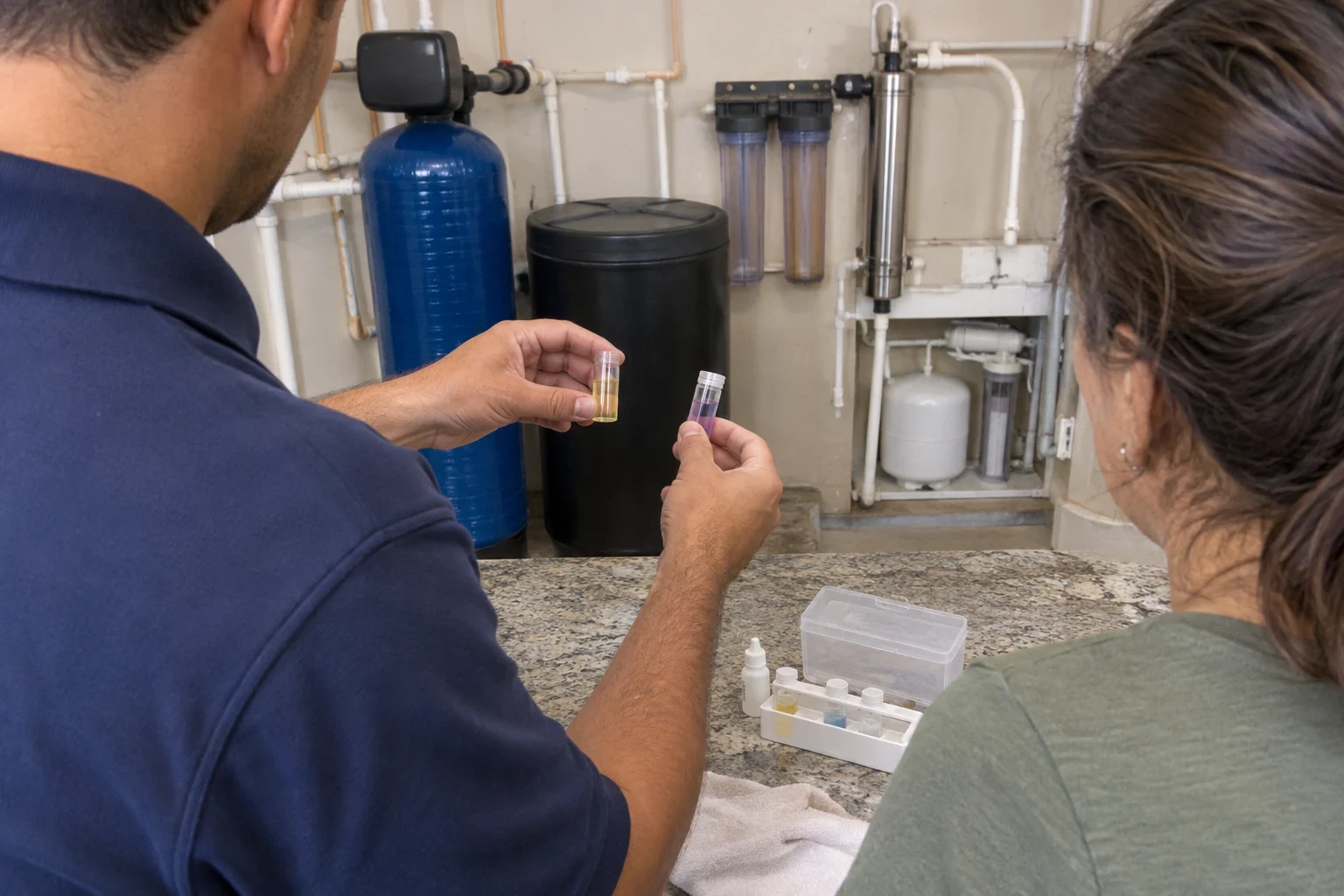
Reverse osmosis questions
Do I need a water softener if I get an RO system?
Each one handles a different job. Reverse osmosis cleans the water you drink and cook with at a single faucet, while a water softener looks after the pipes, fixtures and appliances across your home. Where water is hard, plenty of homes run both, and the RO unit also strips out the sodium a softener adds. Our Water Softener Installation page explains that side of the work.
How long do the filters last?
The sediment and carbon cartridges are usually swapped about once a year, and the membrane outlasts them. A household that draws a lot of drinking water will reach those dates sooner. At handover we show you each stage in the housing so you can tell them apart when one is due.
Does an RO system waste water?
Some of the incoming water rinses the membrane and leaves through the drain line. The share depends on the model and on your water pressure. If that matters to you, ask about higher-efficiency units when we talk by phone.
Will it take up my whole sink cabinet?
A model with a storage tank claims a good part of the cabinet, while a tankless unit takes far less room. We look at the space together and keep the tubing snug against the cabinet walls so you lose as little storage as possible.
What warranty comes with the installation?
Every RO system we put in comes with a 2-year labor warranty and a 2-year installation warranty. Both cover the work we do on the connections, fittings and faucet. If something from our install gives you trouble in that time, give us a call and we will talk it through.
Cleaner drinking water, a tidy cabinet
Describe your kitchen and how you use your drinking water, and we will lay out the choices that suit it. We work in Maricopa and nearby towns such as Casa Grande, Chandler and San Tan Valley.